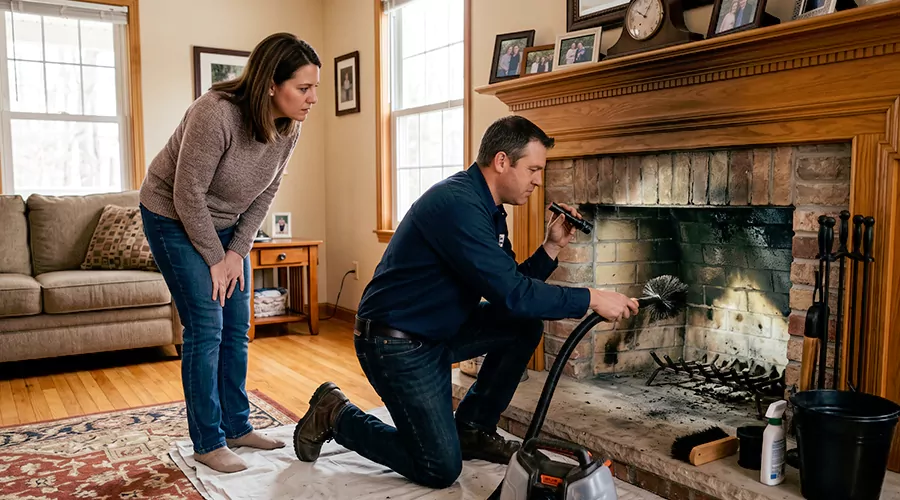
Why Does My Fireplace Smell Bad?
Discover why your fireplace smells bad, including creosote buildup, chimney blockages, moisture, animal nests, poor ventilation, and lingering smoke odors.




Based on 500+ Reviews

Proudly American
Owned & Operated

A bad smell coming from a fireplace is a common problem that can make a home uncomfortable and may indicate an issue with the chimney, fireplace, or ventilation system. While some fireplace odors are caused by normal buildup, strong or unusual smells can be a sign that cleaning, maintenance, or repairs are needed.
A fireplace can smell bad because of creosote buildup, moisture problems, animal activity, poor airflow, or debris inside the chimney. Identifying the source of the odor is important because some problems can lead to chimney damage or indoor air quality concerns. Professional fireplace smell removal can help address the source of persistent odors and prevent them from returning.
Understanding the causes of fireplace odors can help homeowners find the right solution and prevent the smell from returning.
Several issues can cause unpleasant fireplace odors.
Common causes include:
Creosote is one of the most common causes of fireplace odors, especially in wood-burning fireplaces. When wood burns, smoke particles and gases can stick to the inside of the chimney and create creosote deposits.
Creosote buildup can cause:
The smell may become stronger during:
Regular chimney cleaning helps remove creosote buildup and reduce odors.
Water entering the chimney can create unpleasant smells.
Moisture problems may occur because of:
When moisture remains inside the chimney, it can lead to:
Fixing the source of water entry is important to prevent recurring odors.
A fireplace that has not been cleaned regularly can develop unpleasant smells.
Common sources include:
Ash can absorb moisture and create stale odors over time.
Cleaning the fireplace area regularly can help reduce smells.
A chimney without proper protection can allow animals to enter.
Common animals include:
Animals can create odors because of:
Signs of animal activity may include:
A chimney cap with a protective screen can help prevent animals from entering.
A dead animal trapped inside a chimney can create a strong unpleasant smell.
Common signs include:
Removing the source of the odor and cleaning the affected area may be necessary.
Moisture inside a chimney can create conditions where mold and mildew develop.
This may happen because of:
Mold-related fireplace odors are often described as:
Resolving moisture problems is the key to preventing mold odors.
Poor airflow can cause fireplace odors to remain inside the home.
Draft problems may occur because of:
When air does not move properly through the chimney, odors can flow back into the room.
Modern homes can sometimes have pressure differences that affect fireplace airflow. Negative air pressure occurs when more air leaves the home than enters.
Common causes include:
This can pull chimney odors back into the living space.
The type of wood used can affect fireplace smells.
Wet or unseasoned wood can produce:
Using dry, properly seasoned firewood can help reduce unpleasant smells.
Problems with chimney components can contribute to fireplace odors.
Possible issues include:
Damage can allow moisture, debris, and odors to enter the fireplace system.
Pay attention to when the smell occurs.
Possible causes:
Possible causes:
Possible causes:
Possible causes:
The solution depends on the cause of the odor.
Possible solutions include:
Masking the smell with air fresheners usually does not solve the underlying problem.
Yes. Chimney cleaning can help remove odors caused by:
However, cleaning will not fix odors caused by:
The underlying cause must also be corrected.
Regular maintenance can help prevent bad fireplace smells.
Helpful steps include:
Preventing moisture and buildup is one of the best ways to avoid odors.
Professional chimney evaluation may be needed when:
A professional inspection can identify problems that are difficult to see.
A fireplace can smell bad because of creosote buildup, moisture, animal activity, poor ventilation, debris, or chimney damage. While some odors are caused by normal fireplace use, persistent or strong smells may indicate a problem that requires cleaning, maintenance, or repairs. Identifying the source of the odor and correcting the underlying issue helps protect the chimney system and improve indoor comfort. Regular chimney cleaning, inspections, moisture protection, and proper fireplace maintenance can help keep the fireplace smelling clean and functioning properly.
Common causes include creosote buildup, moisture, animal activity, and poor chimney ventilation.
A chimney cap can help prevent animals and debris from entering, but it will not remove existing odors caused by creosote or moisture.
Rain can increase chimney odors by activating creosote smells or revealing moisture problems inside the chimney.
Cleaning can remove odors caused by soot, ash, and creosote buildup, but other problems may require repairs.
Yes. Moisture problems can create conditions where mold and mildew may develop.
Chimney cleaning frequency depends on fireplace use, fuel type, and the amount of buildup inside the chimney.
Discover why your fireplace smells bad, including creosote buildup, chimney blockages, moisture, animal nests, poor ventilation, and lingering smoke odors.
